What 'Raised Without Antibiotics' Actually Means — And What It Conveniently Leaves Out
You picked the right chicken. You know you did. It said raised without antibiotics right there on the front of the package, printed in a clean font next to a tasteful illustration of a barn. You paid the extra four dollars. You felt good about it.
So why are food scientists and public health researchers increasingly warning that antibiotic-free labels may be telling us far less than we think?
The short answer: because the absence of antibiotics in a single flock's life cycle doesn't erase the bacterial landscape those animals were born into — or the one they left behind.
The Label Tells You About the Chicken. Not the Farm.
When a label says a bird was raised without antibiotics, it means exactly that: that particular animal was not administered antibiotics during its lifetime. It says nothing about the farm's history, the soil its pasture sits on, the water running through its operation, or the flocks that came before it.
Antibiotic-resistant bacteria don't disappear when a farm switches protocols. They linger. In the soil. In the water table. In the guts of rodents and birds that pass through the property. Resistance genes can persist in farm environments for years after antibiotic use stops — a fact that's well-documented in agricultural microbiology research but almost never mentioned in the marketing copy on your grocery store cooler door.
This isn't a fringe concern. Studies from institutions including Johns Hopkins and UC Davis have found antibiotic-resistant bacteria on farms that had transitioned away from antibiotic use, sometimes at levels comparable to conventional operations. The label reflects a snapshot. The farm's microbial ecosystem is a much longer story.
'Natural' Is Doing a Lot of Heavy Lifting
Here's where things get genuinely frustrating: the word natural has almost no regulatory teeth when it comes to meat. The USDA's definition essentially means the product was minimally processed and contains no artificial ingredients. It says nothing about how the animal was raised, what it was exposed to, or whether the farming environment harbors drug-resistant pathogens.
So a chicken can be marketed as natural and antibiotic-free while coming from a crowded indoor facility on a property with a decades-long history of heavy antibiotic use. The birds themselves never got a dose. The label is technically accurate. And yet the picture it paints for the average shopper is almost entirely fictional.
The gap between what these phrases imply and what they guarantee is exactly where a lot of poultry marketing lives.
The Difference Between Avoiding Antibiotics and Actually Reducing Resistance
Farms that genuinely move the needle on antibiotic resistance aren't just withholding drugs — they're redesigning the conditions that make drugs feel necessary in the first place.
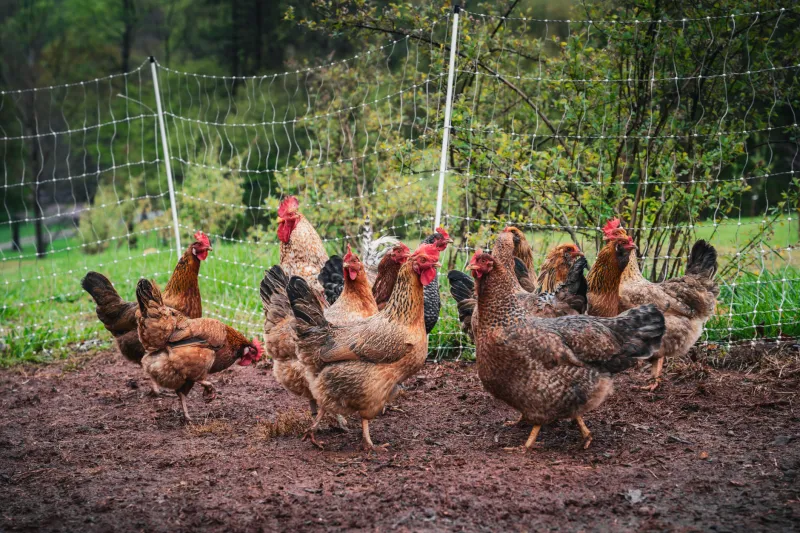
That means lower stocking densities, so animals aren't packed together in ways that accelerate pathogen spread. It means outdoor access and rotational grazing systems that break disease cycles naturally. It means investing in breed genetics that support immune resilience rather than just maximum growth rate. And it means accepting that some animals will get sick and some will die, rather than using prophylactic medication to paper over the biological stress of industrial-scale confinement.
These farms exist. They're often smaller, often independent, and often not particularly loud about what they're doing — because what they're doing is just farming carefully, not running a marketing campaign.
The contrast with label-forward operations is stark. Some large poultry producers shifted to antibiotic-free programs primarily because consumer demand made it profitable, without meaningfully changing the underlying production model. The drugs went away. The density didn't. The ventilation didn't. The environmental stress on the birds didn't. What changed was the packaging.
What Resistance Patterns Actually Reveal
Researchers who study antibiotic resistance look at something called the resistome — the full collection of resistance genes present in a given environment or organism. And when they sample meat from antibiotic-free certified products, they don't always find a clean bill of health.
A 2019 study published in the journal Environmental Health Perspectives found that workers at antibiotic-free poultry farms still carried higher rates of certain resistant bacteria compared to people with no farm exposure. The farms weren't using drugs. But the resistant organisms were still circulating.
This is the part that doesn't fit neatly on a label. Resistance is an ecological problem, not just a pharmaceutical one. You can't buy your way out of it by choosing the right package. You can, however, support the farming systems that are genuinely trying to address the root causes — and learn to tell the difference between those and the ones that are simply better at branding.
How to Actually Find Chicken Worth Trusting
None of this means you should give up and grab the cheapest bird in the case. It means you need to ask better questions.
At a farmers market or through a local CSA, you can ask directly: How long has this farm been antibiotic-free? What are your stocking densities? Do the birds have outdoor access year-round, or just technically? What do you do when an animal gets sick? Farmers who are genuinely doing the work tend to love these questions. Farmers who are primarily selling a story tend to pivot quickly to the label.
For grocery store purchases, look beyond the antibiotic-free claim and check for third-party certifications that address conditions, not just drug use. Animal Welfare Approved and Certified Humane both require meaningful standards around space and outdoor access — the kinds of conditions that actually reduce the need for antibiotics in the first place. USDA Organic certification requires antibiotic-free raising but also mandates outdoor access, which at least points in the right direction.
And when you see natural on a package of chicken, treat it the same way you'd treat artisanal on a bag of chips: as an aesthetic choice, not a factual claim.
The Honest Version of This Story
The antibiotic crisis in agriculture is real, it's serious, and it won't be solved by a label redesign. Resistant bacteria are already moving off farms and into communities — through water runoff, through wildlife, through the people who work in and around these operations every day.
The farms actually fighting this problem are doing something harder and less photogenic than printing a clean logo on a package. They're rebuilding the biological conditions that make healthy animals possible without pharmaceutical intervention. That work is slow, expensive, and genuinely difficult.
It deserves your support. And it deserves better than being lumped in with every other operation that figured out the marketing before it figured out the farming.
Your chicken choice matters. Just make sure you know what it's actually choosing.