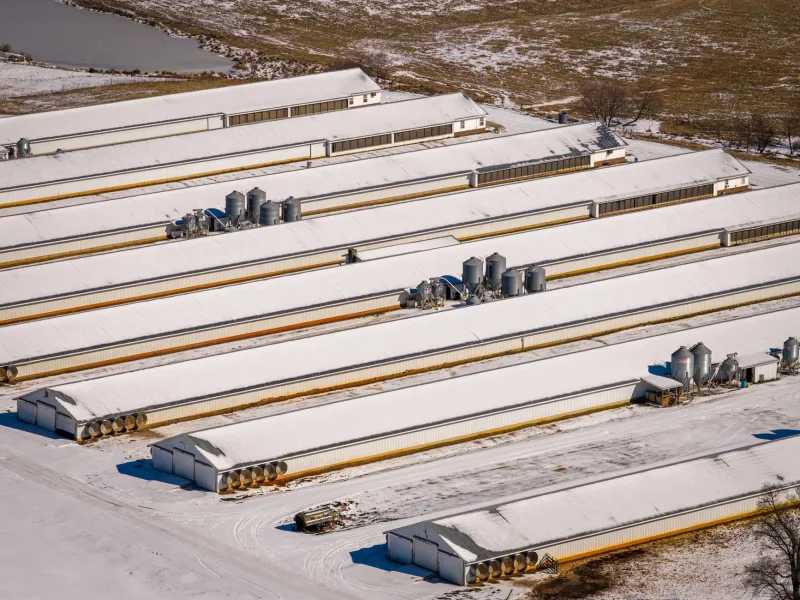
When the Tractor Leaves Town: The True Price of Corporate Farming's Takeover of Rural America
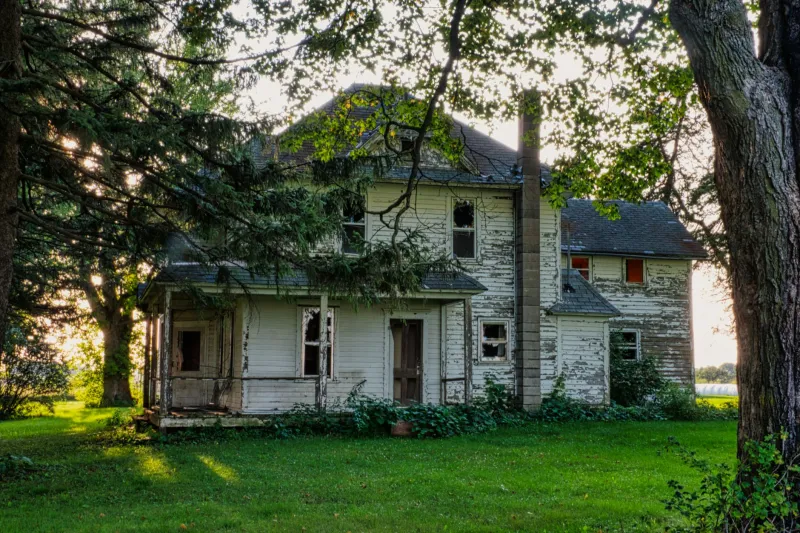
Drive through almost any agricultural county in the Midwest right now and you'll notice something quietly unsettling. The grain elevators are still there. The fields are still planted. But the farmhouses are dark, the main streets are half-empty, and the families who worked that land for three or four generations? Gone.
This isn't a natural evolution. It's the predictable outcome of decades of deliberate policy, corporate consolidation, and a food system that has quietly decided that efficiency matters more than people.
The Numbers Tell a Story Nobody's Celebrating
In 1935, there were roughly 6.8 million farms operating across the United States. Today, that number sits closer to 2 million — and it's still falling. But the raw farm count doesn't even capture the real shift. What's happened isn't just that there are fewer farms. It's that the farms that remain are increasingly owned by fewer and fewer entities.
According to USDA data, the largest 10 percent of farms now account for more than 70 percent of all agricultural sales in this country. Meanwhile, the number of mid-sized family operations — the ones that historically anchored rural towns — has been hollowed out almost entirely. These aren't farms that failed because their operators weren't skilled or hardworking. Many of them were squeezed out through a combination of artificially suppressed commodity prices, rising input costs controlled by the same corporations buying up land, and a financial system that systematically favors scale over sustainability.
Terry Wilkins, a third-generation corn and soybean farmer in southern Iowa, watched his neighbors sell off one by one over a span of about fifteen years. "It wasn't dramatic," he told us. "There was no single moment. It was just — every year, another family left. And eventually you realize the town you grew up in doesn't really exist anymore."
What Happens to the Land Itself
When a corporation absorbs a family farm, the land doesn't disappear. But what happens to it matters enormously — both ecologically and economically.
Family farmers, particularly those with generational ties to their land, tend to invest in long-term soil health. They rotate crops. They manage drainage thoughtfully. They know which fields flood in a wet spring and which hillsides erode under heavy tillage. That knowledge is accumulated over decades and passed down at kitchen tables.
Corporate operations, managed from offices hundreds of miles away and evaluated on quarterly returns, don't carry that institutional memory. Research from organizations like the American Farmland Trust consistently shows that consolidated, absentee-owned farmland is more likely to be continuously cropped with monocultures, more likely to rely heavily on synthetic inputs, and less likely to incorporate conservation practices.
The ecological cost is real — degraded soil, increased runoff, diminished biodiversity. But the economic cost to the surrounding community is just as significant. Corporate farms don't bank locally. They don't buy equipment from the implement dealer on Main Street. They don't hire local workers in any meaningful numbers. The money that flows through a corporate agricultural operation tends to flow right back out of the county, often out of the state.
Dr. Lena Ostrowski, an agricultural economist at the University of Nebraska, has spent years studying what she calls "the multiplier gap" between family farm dollars and corporate farm dollars in rural communities. Her findings are stark. "A dollar earned by a family farm recirculates through a local economy at a significantly higher rate than a dollar earned by a large consolidated operation," she explains. "When you lose family farms, you're not just losing farms. You're losing the economic engine that keeps rural communities viable."
The Ripple Effects Nobody Puts on a Price Sticker
Talk to people in towns that have watched consolidation accelerate over the past two decades and the losses they describe go well beyond economics.
Schools close or consolidate because enrollment drops. Doctors leave because the patient base shrinks. Churches merge or shutter. The hardware store, the diner, the local newspaper — all of them depend on a certain population density that corporate agriculture, for all its scale, simply doesn't generate.
There's also a subtler loss that's harder to quantify: food sovereignty. When a handful of corporations control the majority of a region's agricultural output, the communities within that region lose meaningful say over how their food is grown, what practices are used, and who benefits from the land.
In contrast, communities with strong networks of diversified family farms tend to support more vibrant local food systems — farmers markets, farm-to-school programs, food hubs, and direct-sale operations that keep food dollars circulating regionally. These aren't just nice amenities. They're resilience infrastructure. When supply chains buckle — as they spectacularly did during the early months of the COVID-19 pandemic — regions with robust local food networks fared significantly better than those wholly dependent on industrial supply chains.
The Policy Machinery That Made This Possible
None of this happened by accident. Agricultural consolidation has been actively enabled by federal farm policy for decades — crop subsidy structures that disproportionately benefit large operations, trade agreements that undercut small domestic producers, and antitrust enforcement that looked the other way as agribusiness giants absorbed competitors and suppliers alike.
The 2018 Farm Bill, like the ones before it, directed the vast majority of its financial support toward the largest commodity producers. Programs theoretically designed to help struggling family farmers often end up functioning as income stabilizers for operations that need them least.
There are voices pushing back. Organizations like the National Sustainable Agriculture Coalition, the Rural Coalition, and a growing network of state-level farm advocacy groups have been fighting for policy reforms that would rebalance the playing field — stronger antitrust enforcement in agriculture, payment limits on farm subsidies, investment in regional food infrastructure, and land access programs for beginning farmers. Progress has been slow, but the pressure is building.
What Thriving Looks Like
It's worth being clear that this isn't an argument for nostalgia. Not every small farm of the past was a model of ecological or social virtue. The goal isn't to freeze agriculture in amber — it's to build a food system that actually serves rural communities, not just the corporations extracting value from them.
And there are genuinely encouraging examples of what that can look like. Cooperative farming models in the Upper Midwest. Land trust programs in New England that keep farmland affordable for new farmers. Regional meat processing networks in the Southeast that give small ranchers viable market access without surrendering to the terms of the big four meatpackers.
These aren't utopian experiments. They're working models, and they share a common thread: they treat the people who grow food and the communities that surround them as the point of the whole enterprise, not as variables to be optimized away.
The Cost We're All Paying
The checkout price of industrial food has always been artificially low — subsidized by policy, by environmental externalities, and by the slow-motion dismantling of the communities that once grew it.
When the tractor leaves town for the last time, when the farmhouse goes dark and the family moves on, the loss doesn't show up anywhere in a grocery store receipt. But it's real, and it's cumulative, and the longer we pretend it isn't happening, the more expensive it becomes to reverse.
The farms that are left — the ones still held by families, still rooted in their communities, still farming with a sense of obligation to the land and the people around them — deserve more than our appreciation. They deserve a food system that doesn't make their survival an act of heroism.
That's the conversation we need to be having. And it starts with understanding exactly what we lose when we lose them.