From Field to Flavorless: The Long, Costly Journey of Your Average Supermarket Tomato
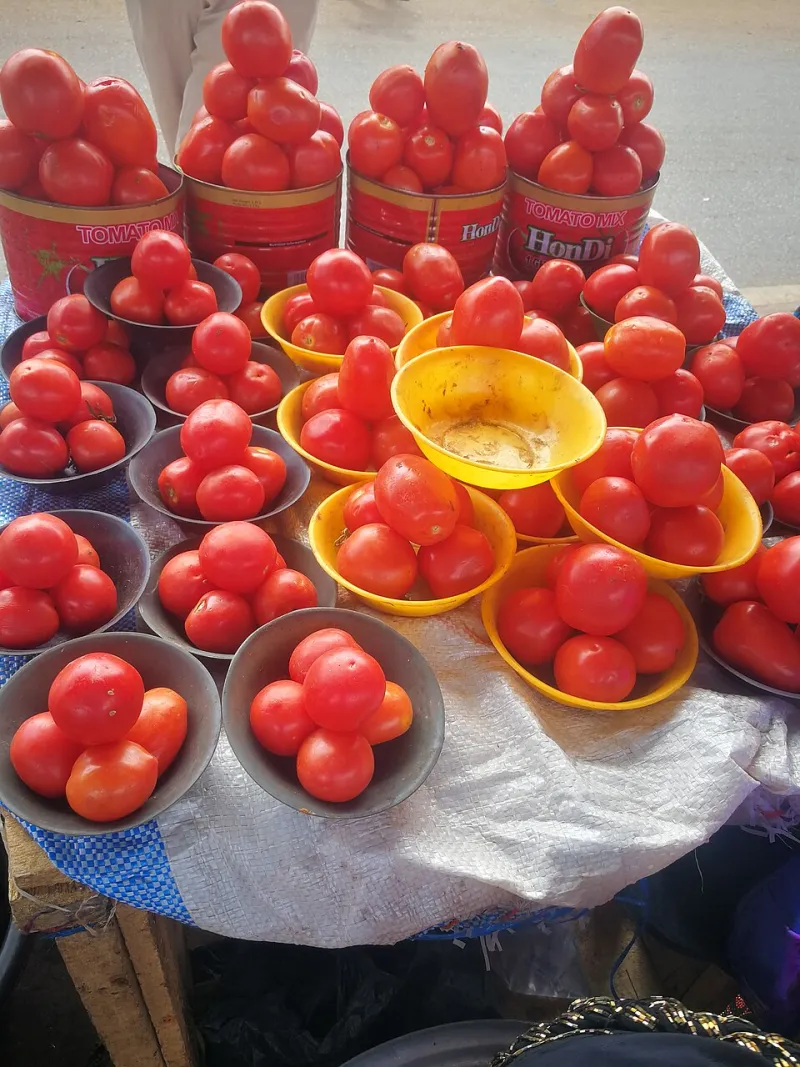
Photo: Tenaciuos Ntaawa, CC BY-SA 4.0, via Wikimedia Commons
Pick up a tomato at your average American supermarket and take a good look at it. It's round, it's shiny, and it's almost certainly disappointing. That watery, cardboard-adjacent bite you've been tolerating your whole life isn't just bad luck — it's the inevitable result of a supply chain engineered for distance, not flavor.
The average supermarket tomato in the United States travels somewhere between 1,000 and 1,500 miles before it lands in your kitchen. If you're buying in January in Chicago or Minneapolis, that number climbs even higher. Most of those tomatoes originate in Florida or California — or increasingly, in Mexico — and they make that journey in refrigerated trucks, stacked in crates, picked hard and green so they can survive the ride without turning to mush.
The result? A vegetable that looks like a tomato, technically qualifies as a tomato, and tastes like almost nothing.
But flavor is just the beginning of what gets lost along the way.
What 1,500 Miles Actually Costs the Planet
Let's talk carbon. The USDA estimates that food transportation accounts for roughly 11% of total food system greenhouse gas emissions in the U.S. Refrigerated trucking — the backbone of long-haul produce delivery — burns diesel at a significant clip, and a single truckload of tomatoes making a cross-country run from Immokalee, Florida to a distribution hub in the Midwest generates hundreds of pounds of CO2 before those tomatoes ever see a shelf.
And the truck is just one leg of the journey. Before that, there's the emissions tied to industrial-scale irrigation systems, synthetic fertilizer production (which is itself an energy-intensive process), and the cold storage facilities that keep gas-ripened tomatoes from going soft in transit. Stack it all up, and the carbon footprint of a single conventionally grown, long-haul supermarket tomato is meaningfully larger than most of us ever stop to consider.
Compare that to a tomato picked that morning at a farm stand 20 miles away. The math isn't even close.
The Nutrient Drain No One Talks About
Here's something the produce industry would rather you not think too hard about: tomatoes — and most fruits and vegetables — begin losing nutritional value the moment they're harvested. Vitamin C degrades. Lycopene content shifts. Antioxidant levels drop. The longer the gap between picking and eating, the less nutritional work that tomato is actually doing for your body.
A 2008 study published in the Journal of Agricultural and Food Chemistry found measurable declines in key nutrients in fresh produce within just a few days of harvest — and that's under ideal refrigerated conditions. The average supermarket tomato, by the time it reaches your table, may be anywhere from 4 to 14 days out of the ground.
A tomato harvested at a local farm that morning and sold directly to you that afternoon? That's a completely different nutritional profile. More vitamin C. More flavor compounds. More of the stuff your body actually came to the table for.
This isn't a small, technical distinction. It's the difference between food that nourishes and food that merely fills space on a plate.
Gas-Ripened and Grown for Shelf Life, Not for You
Most commercial tomatoes aren't allowed to ripen on the vine. They're picked green or "breaker stage" (just beginning to turn) specifically because a ripe tomato can't survive a 1,500-mile road trip without becoming unsellable. Once they arrive at distribution centers, many are exposed to ethylene gas — a naturally occurring plant hormone — to trigger the color change that makes them look ripe.
The problem is that color and ripeness are not the same thing. Ethylene gas can turn a tomato red without triggering the full biochemical cascade that produces flavor, aroma, and peak nutrient density. You get the visual signal of ripeness without the substance of it.
Florida tomato growers have faced criticism for this practice for decades. A 2011 investigative piece by journalist Barry Estabrook in his book Tomatoland brought wide attention to the human and environmental costs of industrial Florida tomato farming — from pesticide exposure for farmworkers to the sheer ecological toll of growing at industrial scale on land that wasn't naturally suited for it.
Pesticide Residue: What's Riding Along for the Trip
The Environmental Working Group (EWG) has included tomatoes on its "Dirty Dozen" list of produce with the highest pesticide residue levels in past years. Industrial tomato farming — particularly in high-volume growing regions — relies heavily on synthetic pesticides and fungicides to protect monoculture crops from the kinds of pest and disease pressure that naturally diverse growing environments resist on their own.
When you buy a locally grown tomato from a farmer you can actually talk to — someone who might be using integrated pest management, cover cropping, or certified organic practices — you have the ability to ask real questions about what went into growing that fruit. That's a kind of food transparency that a barcode and a PLU sticker simply cannot offer.
How to Calculate Your Own Food Miles
You don't need to be a supply chain analyst to start making more informed choices. Here are a few practical tools:
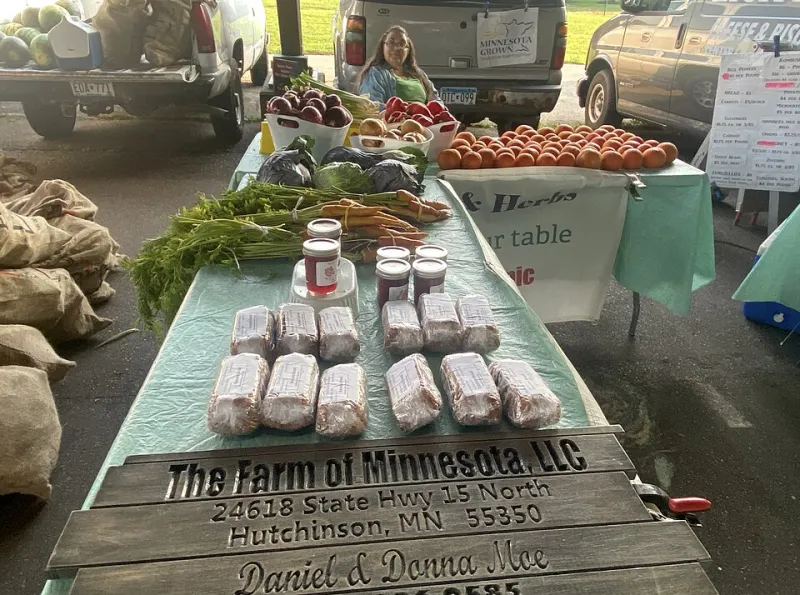
- Ask the source. At a farmers market, ask the vendor where their farm is located and whether they grew everything themselves. A vendor who can answer that question clearly is already a better sign than one who can't.
- Use the USDA's Agricultural Marketing Service locator at ams.usda.gov to find farmers markets, CSA programs, and local food hubs near you.
- Check the PLU code. A five-digit PLU code starting with 9 indicates organically grown produce. A five-digit code starting with 8 indicates genetically modified. A four-digit code tells you nothing about method — just variety and size.
- Look at the origin sticker. If your tomato says "Product of Mexico" or lists a state more than a few hundred miles away, you're looking at a long-haul item. That's useful information.
- Join a CSA. Community Supported Agriculture programs connect you directly with a local farm, often with full transparency about growing practices. Your weekly box comes from a specific piece of land, not a distribution network.
The Real Price of Cheap Produce
A supermarket tomato might cost $1.29 a pound. A local heirloom at your Saturday farmers market might run $3.50 or $4.00. At face value, that looks like an easy call. But when you factor in the carbon cost, the nutritional deficit, the pesticide residue, the labor conditions that often underpin industrial agriculture, and the simple fact that the expensive tomato is going to taste like an actual tomato — the math starts to shift.
Convenience has a price. It's just rarely printed on the tag.
At Blue Farm Table, we believe knowing where your food comes from — and what it costs to get there — is the first step toward eating in a way that's better for your body and better for the planet. The tomato is just the beginning.