What the Price Tag on Those $0.99 Tomatoes Is Really Hiding

Photo by Photo by Vasile Stefirta on Unsplash on Unsplash
Pick up a tomato at your average American supermarket and you'll probably pay somewhere between a dollar and two dollars a pound. Compare that to the $4 or $5 you might spend at a local farmers market or a farm-direct CSA box, and it's easy to understand why most people reach for the cheaper option. Budget is real. Life is expensive. Nobody's judging.
But here's the thing — that grocery store tomato isn't actually cheap. You're just not the one paying the full price. The land is. The water table is. Future generations are. And honestly? You already paid part of it with your taxes.
Let's slow down and actually look at what gets left off that label.
The Soil Debt Nobody Talks About
Industrial tomato farming — concentrated heavily in California's San Joaquin Valley and parts of Florida — depends on coaxing maximum yield out of the same ground, year after year. That means synthetic fertilizers, herbicides, and pesticides applied at scale. It means monocropping, which strips the soil of microbial diversity. It means tilling practices that destroy the fungal networks plants rely on to absorb nutrients.
The result? American farmland is losing topsoil at a rate that scientists estimate is ten times faster than it can naturally regenerate. The USDA has acknowledged that the United States has already lost roughly half of its original topsoil over the past 150 years of industrial farming. Topsoil that took thousands of years to build.
When soil degrades, it holds less water, produces less nutritious food, and requires even more synthetic inputs just to maintain yields. That's a spiral, not a system. And none of that long-term cost shows up on your grocery receipt.
Water: The Hidden Subsidy Underneath the Ground
Growing tomatoes at industrial scale is thirsty work. In California alone, agriculture accounts for roughly 80 percent of the state's developed water use, with a significant chunk going to commodity crops. Much of that water is pulled from aquifers — underground reserves that accumulated over millennia — and they are not refilling at the rate they're being drained.
In the Central Valley, land is literally sinking. A process called subsidence, caused by over-pumping groundwater, has caused some areas to drop by more than 30 feet over the past century. Infrastructure built on that land — roads, bridges, irrigation canals — cracks and buckles. The cost of repairing it falls on local governments and, again, on taxpayers.
When water becomes scarcer, it becomes more expensive. Farming communities that have relied on cheap groundwater access for generations are now facing crisis-level decisions. That future cost? Still not on the tomato label.
Farm Subsidies and the Price Illusion
Here's where it gets really uncomfortable. The federal government distributes billions of dollars annually in agricultural subsidies, and the vast majority of that money flows to large commodity operations — not small, diversified farms. According to the Environmental Working Group's Farm Subsidy Database, the top 10 percent of subsidy recipients have historically collected more than 70 percent of the total payments.
What this means, practically speaking, is that the artificially low prices you see on industrial produce are partly funded by your federal tax dollars. The system is designed — whether intentionally or through decades of policy inertia — to make commodity food look cheaper than it is. Small regenerative farmers don't get that cushion. Their prices reflect something closer to the actual cost of growing food responsibly.
So when someone says local organic tomatoes are "too expensive," it's worth asking: compared to what? Compared to a price that's been subsidized and externalized into the environment and the public budget?
Ecosystem Damage Has a Price, Too
Beyond the farm itself, industrial agriculture's footprint spreads outward. Pesticide and fertilizer runoff contaminates waterways, contributing to algae blooms that create dead zones in rivers and coastal areas — including the massive hypoxic zone in the Gulf of Mexico, fed largely by agricultural runoff from the Mississippi River basin. Aquatic ecosystems collapse. Commercial fishing industries suffer. Drinking water in rural communities gets contaminated.
These are real economic damages. The cleanup costs, the health costs in communities near large agricultural operations, the loss of biodiversity — economists call these "externalities," which is a polite way of saying costs that the producer doesn't pay and the consumer doesn't see. They get distributed invisibly across society and the natural world.
The Honest Math of Regenerative Produce
None of this is an argument that everyone can or should pay farmers market prices for every vegetable. Economic inequality is real, and food access is a genuine justice issue. But for those who do have some flexibility in their grocery budget, it's worth reframing what "affordable" actually means.
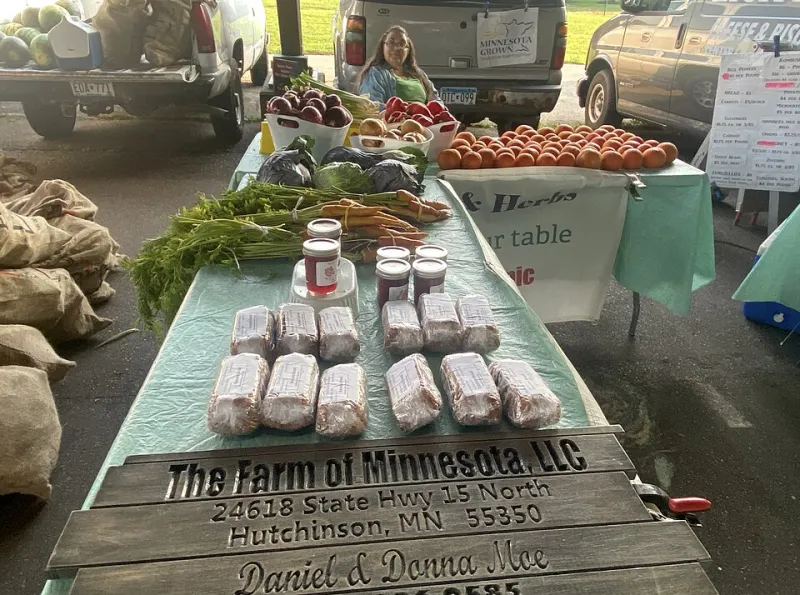
A regenerative farmer growing tomatoes in living soil, rotating crops, using cover crops to fix nitrogen naturally, and protecting local watersheds is building something rather than depleting it. The price they charge reflects labor, land stewardship, and the absence of synthetic shortcuts. It doesn't come with a hidden invoice sent to the aquifer, the atmosphere, or your county's infrastructure budget.
Investing in local, regenerative producers is, in a very literal sense, paying the honest price for food. It's choosing not to defer the bill to the land.
What You Can Do With This Information
You don't have to overhaul your entire grocery budget overnight. But a few shifts can make a real difference — both for your own awareness and for the farmers doing things right.
- Prioritize locally grown for the produce you eat most. Tomatoes, salad greens, and herbs are great starting points because they're widely available through farmers markets and CSAs.
- Ask questions at the farmers market. How do you manage your soil? Do you rotate crops? What do you use for pest control? Farmers who are doing the work will love talking about it.
- Look into CSA shares. Community-supported agriculture programs often offer sliding scale pricing or payment plans, and they're one of the most direct ways to put money in the hands of small producers.
- Support policy change. Advocate for farm subsidy reform that redirects public dollars toward regenerative and small-scale operations. Organizations like the National Sustainable Agriculture Coalition are doing this work.
That $0.99 tomato isn't cheap. It's just borrowing from a future we're all going to have to live in. The more clearly we see that, the better choices we can make — one tomato at a time.