Farmers Market or Farmers Theater? How to Spot the Real Deal at Your Local Stand
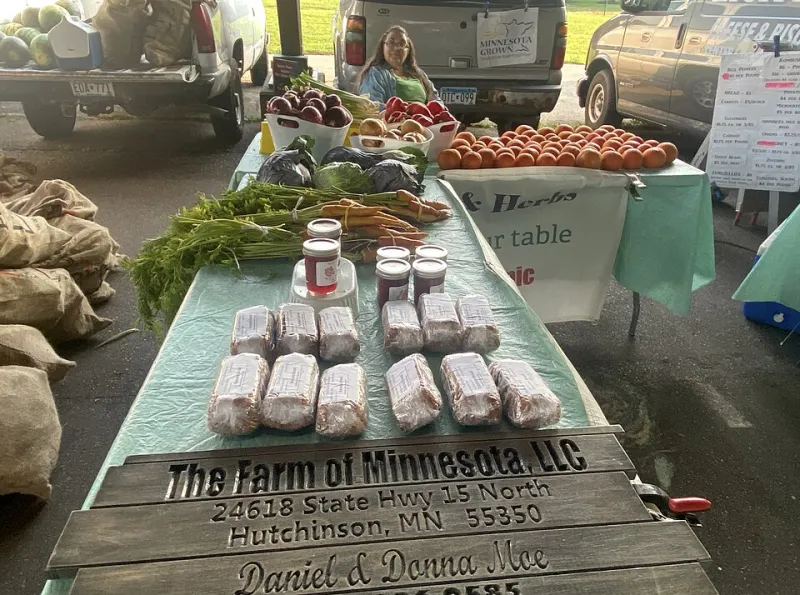
Photo: Myotus, CC0, via Wikimedia Commons
There's something genuinely magical about a Saturday morning farmers market. The mismatched crates, the hand-lettered signs, the vendor in the sun-faded hat who looks like he just stepped off a tractor. It feels honest. It feels local. But here's an uncomfortable truth that the local food movement doesn't always talk about loudly enough: not everything at your farmers market was grown anywhere near your zip code — and in some cases, the person selling it never touched a seed in their life.
This isn't a takedown of farmers markets. Most of them are doing exactly what they promise. But as demand for local, sustainable food has exploded over the past decade, so has the incentive to look local without necessarily being local. Call it agri-theater. Call it greenwashing with a burlap aesthetic. Whatever you name it, it's worth understanding — because when you spend $6 on a tomato thinking you're supporting a family farm two counties over, you deserve to know where that tomato actually came from.
What 'Local' Actually Means (Spoiler: It's Complicated)
Here's the first problem: there is no federally standardized legal definition of 'local' when it comes to food. The USDA has offered loose guidance suggesting that local food travels less than 400 miles from origin to sale, but that's not a rule — it's a suggestion. A vendor in Portland, Oregon could technically source produce from central California and still operate within that range. Meanwhile, your state might have its own rules, or none at all.
Farmers markets themselves set their own vendor requirements, and those standards vary wildly. Some markets — especially well-established ones in cities like Portland, Denver, and Madison — have rigorous verification processes, farm inspection requirements, and strict mileage limits. Others operate more on the honor system, which creates obvious opportunities for abuse.
The result is a patchwork system where 'local' can mean a ten-acre farm twenty miles away or a reseller who bought wholesale from a regional distributor and set up a charming table with a chalkboard sign.
The Reseller Problem
Farmer-resellers — sometimes called 'tailgate vendors' in the industry — are the most common source of confusion. These are vendors who purchase produce from other farms (or even wholesale markets like a regional produce terminal) and sell it at farmers markets, sometimes without clearly disclosing that they didn't grow it themselves.
This isn't always deceptive. Many markets actually allow resellers, especially for products like tropical fruit that simply can't be grown locally. The problem arises when resellers present themselves as growers, or when the distinction is deliberately obscured. A vendor wearing dirt-stained gloves doesn't automatically mean they grew what they're selling.
In 2018, a widely-circulated investigation by a regional food reporter in the Mid-Atlantic found that several popular farmers market vendors were sourcing significant portions of their inventory from the Philadelphia Wholesale Produce Market — the same source supplying many grocery stores — while marketing themselves as local farms. Customers were paying premium prices for the same product they could have bought cheaper at the supermarket.
Questions That Cut Through the Performance
The good news is that genuine farmers love talking about their farms. They'll tell you which field a tomato came from, what variety it is, why they chose it, and how the weather this summer affected the crop. That enthusiasm is one of the clearest signals you're dealing with someone who actually grew what they're selling.
Here are some specific questions that can help you separate the real from the theatrical:
"Where exactly is your farm?" Don't accept a vague county name. Ask for a town, a road, a landmark. A real farmer will have a specific answer. If someone hesitates or gets evasive, that's a signal.
"Can I visit?" Many small farms genuinely welcome visitors — some even host farm tours or u-pick events. A vendor who seems uncomfortable with this question is worth scrutinizing.
"Did you grow everything at your table, or do you source from other farms?" This is a totally reasonable question, and an honest vendor will tell you straight. Some farms do legitimately partner with neighboring operations to fill out their offerings — but they should say so.
"What's your growing practice — conventional, certified organic, or something in between?" Certified organic means a third party has verified the claim. 'Grown without pesticides' is self-reported and unverified. Neither answer is automatically bad, but understanding the difference matters.
"What's your earliest and latest crop this season?" A real farmer can answer this in their sleep. Someone who doesn't actually grow produce will fumble it.
Reading the Market's Own Standards
Before you even approach a vendor, look up your local market's vendor policies. Many markets post them online, and the specifics tell you a lot. Does the market require proof of farm ownership? Do they conduct surprise inspections? Is there a defined mileage radius? Do they allow resellers, and if so, must they disclose it?
Markets that take transparency seriously often have visible certification or membership markers. The Certified Farmers' Market designation in California, for example, requires that vendors grow what they sell. Some markets partner with organizations like the National Sustainable Agriculture Coalition to vet their vendors. These aren't guarantees, but they're meaningful signals.
If your local market's policies are vague or hard to find, that itself is worth noting — and possibly worth raising with market management.
The Farmers Who Are Doing It Right
Let's be clear: the majority of farmers market vendors are exactly who they say they are. They're up before dawn, they've got calluses, and they've been watching the weather forecast obsessively for weeks. They're the people this whole ecosystem is built around, and they're often frustrated by the bad actors who muddy the waters.
These are the vendors who will hand you a business card with a farm address on it. Who will tell you, unprompted, that their green beans ran short this week because of the heat. Who will suggest you try the ugly-looking tomato because it tastes better than the pretty one. Who might even know your name by your third visit.
Building that kind of relationship — with a specific farmer, at a specific market, over multiple seasons — is really the whole point. It's not just about where your food comes from. It's about knowing the story behind it, and trusting that story is true.
A Few Practical Steps Before Your Next Market Run
You don't need to interrogate every vendor like a food journalist. But a little informed skepticism goes a long way. Before your next visit, spend five minutes looking up your market's vendor policies. Pick one or two vendors you're curious about and ask them a genuine question about their farm. Follow local food accounts or community boards where shoppers share their experiences.
And if something feels off — if the produce looks suspiciously uniform, if the vendor can't answer basic questions about their growing practices, if the table feels more like a storefront than a farm stand — trust that instinct. Your farmers market dollars are a vote. Make sure you know who you're voting for.