Seeds of Confusion: The Honest Truth About Heirlooms, Hybrids, and What's Actually Growing at Your Farmers Market
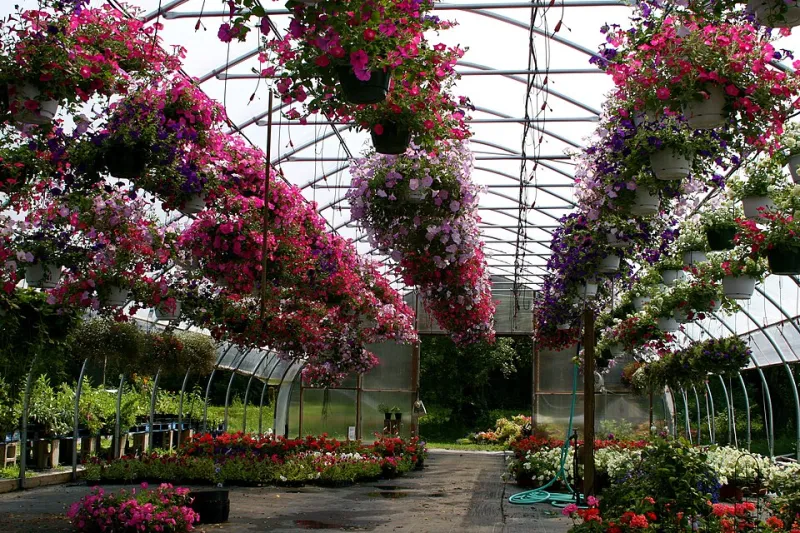
Photo: liz west from Boxborough, MA, CC BY 2.0, via Wikimedia Commons
There's a particular kind of tomato theater that plays out every August at farmers markets across the country. The sign says "heirloom," the colors are wild and gorgeous — deep purple, striped green, blushing orange — and the price is steep enough to make you feel like you're buying something genuinely special. Often, you are. But sometimes, you're buying into a story that's more complicated than the chalkboard lets on.
The words "heirloom," "hybrid," and occasionally "GMO" get tossed around at market stalls, in grocery store signage, and across food media with a confidence that rarely matches the nuance behind them. For shoppers who care about where their food comes from and how it was grown, the confusion is real — and it matters. Let's actually sort this out.
What Makes a Seed an Heirloom?
The short answer: time and open pollination. Heirloom varieties are cultivars that have been grown, saved, and passed down across generations — typically defined as at least 50 years old, though some seed historians draw the line at pre-World War II, before industrial agriculture reshaped the food system. The key characteristic is that they're open-pollinated, meaning they reproduce true to type from seed. Plant an heirloom tomato, save the seeds, plant those seeds next year, and you'll get the same tomato.
This matters for a few reasons beyond sentimentality. Open-pollinated seeds can be saved by farmers without buying new stock every season, which reduces dependency on seed companies and preserves genetic diversity. Many heirloom varieties also carry flavor profiles that were bred out of commercial crops in favor of shelf life and uniformity — hence the fervent devotion to a genuinely good Brandywine.
But here's what the romantic narrative sometimes skips: heirlooms can be finicky. They're often more susceptible to disease, lower-yielding, and harder to grow consistently than modern alternatives. A farmer choosing heirlooms is making a real trade-off, and it's worth appreciating that.
Hybrids Are Not the Villain
This is where the conversation tends to go sideways. In food-conscious circles, "hybrid" has quietly become a dirty word — lumped in with GMOs, associated with industrial agriculture, treated as the opposite of wholesome. That's a misunderstanding worth correcting.
Hybrid seeds are produced by deliberately cross-pollinating two different parent varieties to combine desirable traits. This is selective breeding — the same process humans have been applying to plants and animals for thousands of years, just done in a more controlled, intentional way. A hybrid tomato might be bred to combine the disease resistance of one parent with the flavor of another. A hybrid squash might be developed specifically to thrive in the humid conditions of the Gulf Coast.
The catch with hybrids is seed saving: the offspring of hybrid plants don't breed true, so farmers typically need to purchase new seed each season. That creates real economic dependency, and it's a legitimate concern — especially for small growers. But the plants themselves aren't inherently problematic, and dismissing them wholesale means ignoring some genuinely thoughtful plant breeding.
Many small and mid-size farmers who care deeply about sustainable practices use hybrids strategically. A grower might plant heirloom dry beans for seed saving and sell at premium, while also growing a disease-resistant hybrid pepper variety because it dramatically reduces the need for sprays. That's not a compromise of values. That's smart, practical farming.
And GMOs? Let's Be Precise.
Genetically modified organisms involve laboratory-level genetic engineering — inserting genes from one organism into another in ways that can't occur through traditional breeding. This is categorically different from hybridization. GMOs are subject to federal regulatory review and are currently prohibited in certified organic production.
At a farmers market selling fresh produce, you're extremely unlikely to encounter GMO crops — not because of any particular virtue, but because the commercially grown GMO crops in the US (primarily corn, soy, canola, cotton, and sugar beets) are largely commodity crops that don't show up as fresh market vegetables. The GMO strawberry panic that circulates on social media every few years? There are no commercially available GMO strawberries. Knowing this helps you ask better questions instead of chasing phantoms.
What to Actually Ask Your Vendor
Armed with a clearer picture, here's how to have a more useful conversation at the market — one that gets you real information instead of reassuring but vague answers.
"Where do you source your seeds?" This is a genuinely illuminating question. Farmers who are thoughtful about seed sourcing will often mention specific companies — Baker Creek, High Mowing, Johnny's Selected Seeds, Fedco — or talk about saving their own. A vendor who can't answer or gets evasive is telling you something, too.
"Do you save any seeds from season to season?" Seed saving is a skill, a commitment, and a form of agricultural stewardship. Not every farmer does it, and that's fine — but the ones who do often have a deeper relationship with their varieties and can tell you more about them.
"Why did you choose this particular variety?" This question opens the door to the honest, interesting stuff. Maybe a farmer grows a specific hybrid zucchini because it's the only variety that survives powdery mildew in their microclimate. Maybe they grow an obscure heirloom bean because their grandmother brought the seeds from Mexico. Both answers are valuable. Both tell you something real.
"Is this open-pollinated?" If seed sovereignty and genetic diversity matter to you, this is the direct question. Open-pollinated means the variety can reproduce true to type and seeds can be saved.
The Bigger Picture
The heirloom-versus-hybrid debate, at its best, is really a conversation about what we value in our food system: genetic diversity, farmer independence, flavor, resilience, accessibility. Those values don't always point in the same direction, and no single seed type has a monopoly on virtue.
What matters more than the category is the relationship — knowing the farmer, understanding their choices, and trusting that they're making decisions with intention. A hybrid tomato grown by a farmer you know, using minimal inputs on well-tended soil, is a better choice than an heirloom grown in ways you know nothing about.
The label on the sign is a starting point. The conversation is where the real transparency begins. Next time you're at the market, skip the assumption and ask the question. You might be surprised what you learn — and the farmers who are doing it right will be glad you asked.