Stuck at the Farmers Market: The Hidden Infrastructure Problem Keeping Sustainable Food Off Grocery Shelves
Every Saturday morning, somewhere in America, a farmer loads a pickup truck before sunrise. Crates of heirloom tomatoes, bundles of kale, cartons of pasture-raised eggs. Hours of driving. A tent, a folding table, a hand-lettered sign. By noon, they've sold out. By 2 p.m., they're packing up and heading home.
It's a good day. But it's also a ceiling.
For thousands of small sustainable and regenerative farms across the country, the farmers market isn't just a sales channel — it's often the only sales channel. Not because the food isn't good enough for grocery stores. Not because consumers don't want it. But because the infrastructure that connects farms to retail shelves was built by and for industrial agriculture, and it was never designed to let anyone else in.
The Highway Nobody Talks About
When people think about what makes industrial food cheap and ubiquitous, they usually point to subsidies, monoculture efficiency, or sheer scale. Those things matter. But there's another piece of the puzzle that rarely gets discussed: distribution.
The conventional food supply chain is a finely tuned machine. Large regional and national distributors — think Sysco, US Foods, and their grocery-side equivalents — operate massive refrigerated warehouse networks, fleets of trucks, and logistics software that coordinates deliveries across hundreds of retail accounts simultaneously. It took decades and billions of dollars to build. And it was optimized, from the ground up, to move enormous, consistent volumes of uniform product.
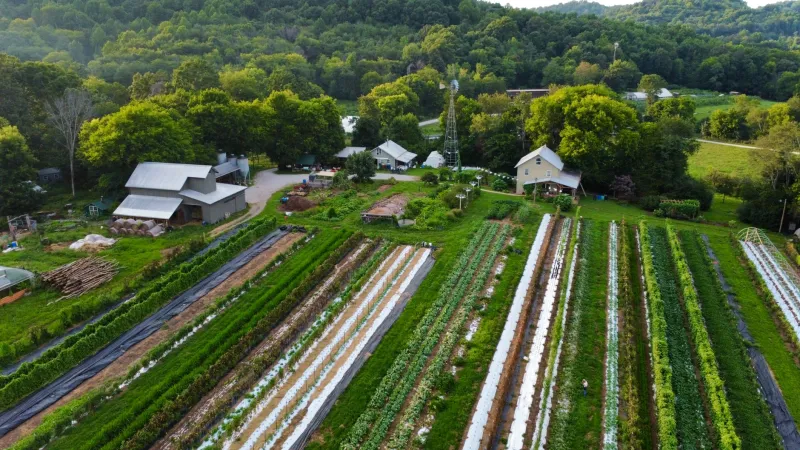
A 500-acre conventional corn or soy operation fits neatly into that system. A 40-acre diversified vegetable farm in Vermont or a 60-acre pasture-raised pork operation in Missouri? Not so much.
The math just doesn't work. Conventional distributors typically require farms to supply a minimum volume per SKU — per product line — that most small operations simply can't hit week after week. They expect standardized packaging, bar codes, liability insurance levels that cost thousands of dollars annually, and the ability to fulfill purchase orders on a retailer's schedule, not a farmer's. Miss a delivery window or come up short on volume, and you're out.
The Middleman Nobody Asked For
What this creates is a structural chokepoint. Between the farm and your grocery store sits a layer of logistics infrastructure that effectively acts as a gatekeeper — not out of malice, necessarily, but out of design. The system was built to reward scale and punish diversity.
Small farms that do manage to crack into conventional distribution often discover a different problem: margins. Distributors typically take 20 to 30 percent of the wholesale price. Retailers mark up from there. By the time a jar of small-farm honey or a dozen pasture-raised eggs hits a shelf, the farmer may be receiving less than half of what the consumer pays — and sometimes far less than that. At those margins, with the overhead of sustainable practices already eating into the bottom line, many farms quietly conclude it's not worth it.
So they stay at the farmers market. Or they sell through a CSA. Or they quietly go under.
Meanwhile, the grocery aisle keeps looking the same.
What's Actually Being Lost
This isn't just an economic inconvenience for farmers. It's a transparency problem for everyone who eats.
When the only farms that can realistically stock your local grocery store are ones large enough to navigate industrial distribution, the story of your food gets flattened. You lose access to the farmer who can tell you exactly what cover crops they planted last fall, which fields their pigs rotated through, why their carrots taste different from the bag in the next bin. That kind of traceability — the kind that actually means something — doesn't survive the conventional supply chain. It gets processed out somewhere between the loading dock and the produce section.
For consumers who genuinely care about where their food comes from, the distribution problem is the reason the gap between intention and action is so frustratingly wide. You want to buy from the regenerative farm two counties over. But they're not on the shelf. And you can't make it to their market stand every week.
The Cooperatives Starting to Change the Game
Here's where the story gets a little more hopeful — though not in a tidy, problem-solved kind of way.
Across the country, small farms are beginning to crack the distribution problem not by competing with industrial infrastructure, but by building their own. Farmer-owned cooperatives and regional food hubs are quietly emerging as an alternative architecture for getting sustainable food from fields to shelves.
The model varies by region, but the core idea is the same: pool resources, share logistics, and negotiate collectively. A single 40-acre farm can't meet a grocery chain's minimum order requirements. But a cooperative of fifteen farms, coordinating through a shared distribution hub, often can.
In the Pacific Northwest, operations like Organically Grown Company — now structured as a public benefit company — have spent years building regional distribution networks specifically designed for smaller organic growers. In the Midwest, Local Food Hub models are helping farms aggregate products and reach institutional buyers like hospitals and schools that want local food but can't manage relationships with dozens of individual farms. On the East Coast, some farmer cooperatives have started their own branded retail lines, cutting out the conventional distributor entirely.
These aren't perfect solutions. Running a cooperative requires management capacity that many small farms don't have. Shared logistics still cost money. And scaling any alternative distribution network is genuinely hard work that takes years.
But they represent something important: proof that the chokepoint isn't inevitable.
What You Can Actually Do With This Information
Understanding the distribution problem changes how you think about where and how you buy food.
When you buy directly from a farm — through a CSA share, a farm stand, or a farmers market — you're not just getting fresher produce. You're bypassing the infrastructure that would otherwise take a significant cut from the farmer's pocket and replace their story with a generic label. That direct connection has real economic value for the people growing your food.
When you see a grocery store that stocks products from local or regional farms, it's worth asking how they got there. Some retailers — independent natural grocers, co-ops, and a handful of regional chains — have made genuine investments in working with local distributors or buying directly from farms. That's worth supporting, and worth asking about.
And when you encounter a farmer who's only at the market, who doesn't have a website or a grocery presence, who seems perpetually on the edge of scaling up but never quite getting there — the distribution wall is probably a big part of why. That context matters.
The food system we have isn't a natural outcome of consumer preferences. It's the result of infrastructure decisions made over decades, most of them designed to move industrial product efficiently and cheaply. Changing it means building something different, piece by piece, cooperative by cooperative, hub by hub.
The farmers are doing their part. The question is whether the rest of the system — including the people who eat — is ready to meet them somewhere closer to the field.