Beyond the Label: Why the Farmers Healing Your Soil Might Not Have a Certification to Show You
Photo: Bernard Gagnon, CC BY-SA 3.0, via Wikimedia Commons
Walk through any well-stocked grocery store and you'll see the USDA Organic seal everywhere — on cereal boxes, baby food pouches, bags of frozen spinach. It's become shorthand for "good," a green light for conscious shoppers trying to do right by their bodies and the planet. But spend enough time talking to farmers, and you'll start hearing something that might surprise you: some of the growers doing the most transformative work for soil health, water quality, and biodiversity have deliberately opted out of that certification system.
This isn't a fringe position. It's a growing, principled stance — and understanding it might completely change how you think about what you're buying at your local farm stand.
What Regenerative Agriculture Actually Means
Let's start with the term itself, because it gets thrown around a lot. Regenerative agriculture isn't a single technique — it's a philosophy of farming that prioritizes rebuilding ecosystem function rather than simply avoiding harm. Where organic certification largely focuses on what you don't do (no synthetic pesticides, no GMOs), regenerative practices are defined by what you actively build.
Cover cropping is one cornerstone. Instead of leaving fields bare between harvests, regenerative farmers plant species like clover, rye, or legumes that hold soil in place, suppress weeds naturally, and fix nitrogen back into the ground. Rotational grazing moves livestock across pastures in deliberate patterns, mimicking the movement of wild herds and allowing grasslands to recover fully before animals return. Minimal or no-till farming keeps soil structure intact, preserving the fungal networks and microbial communities that make dirt genuinely alive.
Together, these practices don't just reduce damage — they actively sequester carbon, restore watersheds, and increase the long-term productivity of the land. That's the "regenerative" part: the farm gets healthier every season, rather than holding steady or slowly degrading.
So Why Skip the Organic Label?
If these farmers are doing so much right, why aren't they certified organic? The answers vary, but a few themes come up again and again.
Cost and paperwork are real barriers. USDA organic certification requires annual fees, detailed record-keeping, and third-party inspections. For a small family operation — the kind running 40 acres in Vermont or a mixed vegetable and livestock farm in Missouri — those costs can be genuinely prohibitive. Many farmers report spending thousands of dollars a year on certification alone, money that could go directly into soil amendments, infrastructure, or simply staying solvent.
The standards don't always reflect ecological complexity. Here's where it gets philosophically interesting. Organic certification has a defined checklist. Regenerative farming, by contrast, is highly context-dependent — what works in the clay soils of the Midwest looks completely different from what's appropriate in the sandy coastal plains of the Carolinas. Some farmers argue that a national certification system, by necessity, flattens that nuance. You can be certified organic while still farming in ways that leave soil biology depleted. You can also be uncertified and running one of the most ecologically sophisticated operations in your county.
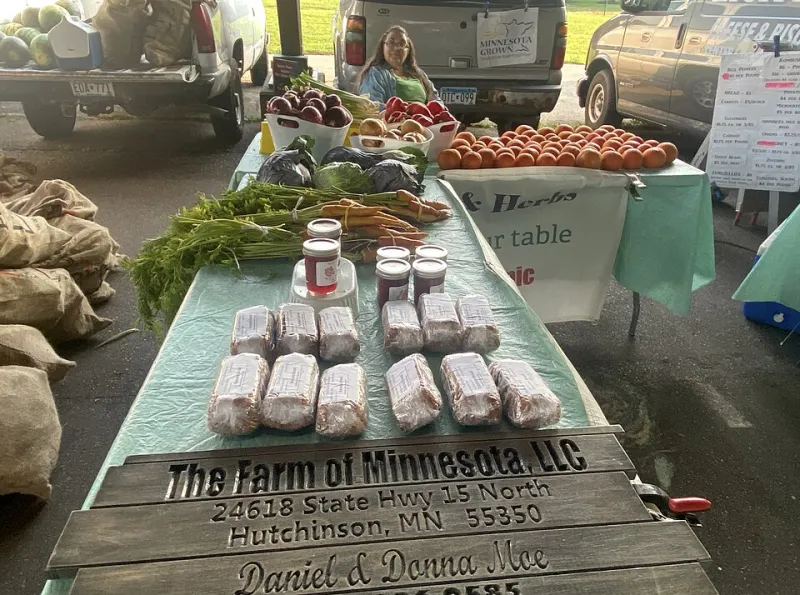
Some farmers simply trust their customers more than their paperwork. This might be the most radical idea of all. A growing cohort of producers have decided that direct relationships — CSA memberships, farm visits, honest conversations at the market — are a more meaningful form of accountability than any third-party audit. They're betting that transparency beats certification.
The Consumer's Dilemma
This puts shoppers in an interesting position. If you've been using the organic label as your primary navigation tool, learning that it's incomplete — or that some of the most dedicated growers have stepped away from it — can feel disorienting. It shouldn't, though. It's actually an invitation to engage more directly with where your food comes from.
Here are some concrete ways to find and support regenerative farms in your area, label or not:
Ask about soil practices, not just inputs. Instead of leading with "are you certified organic," try asking how a farmer manages soil health between growing seasons. A grower who lights up talking about their cover crop mix or their composting setup is showing you something that no label can fully capture.
Look for farms that welcome visits. Regenerative farmers tend to be proud of their land because it genuinely looks different — more diverse, more alive, often more visually complex than a monoculture field. Many will invite customers to see for themselves. Take them up on it.
Seek out platforms built for transparency. Resources like the Savory Institute's Land to Market program, Regenerative Organic Certified (ROC) — which does layer regenerative standards on top of organic requirements — and local farm directories maintained by regional food hubs can all help you identify producers whose practices align with your values.
Join a CSA. Community Supported Agriculture is one of the most direct ways to build the kind of ongoing relationship where these conversations happen naturally. When you're picking up your weekly box and chatting with the farmer, you learn things no label would ever tell you.
A More Honest Way to Eat
The organic label was a genuine breakthrough when it was established — it created a shared language and gave consumers a reliable baseline. But it was designed for a different moment, before we understood as much as we now do about soil carbon, mycorrhizal networks, and the role that grazing animals play in healthy grassland ecosystems.
The farmers leading the regenerative movement aren't rejecting accountability. They're asking for a deeper kind of it. They want you to know their names, walk their fields, and understand the specific choices they're making for the specific land they're stewarding. That's not less rigorous than a certification. In a lot of ways, it's more.
The next time you're at a farm stand and you don't see that familiar green-and-white seal, don't walk away. Ask a question instead. You might be standing in front of the most important food system work happening in your county — and it just doesn't have a sticker on it yet.