Green on the Surface, Hollow Underneath: How Regenerative Agriculture Became the Food Industry's Favorite Buzzword
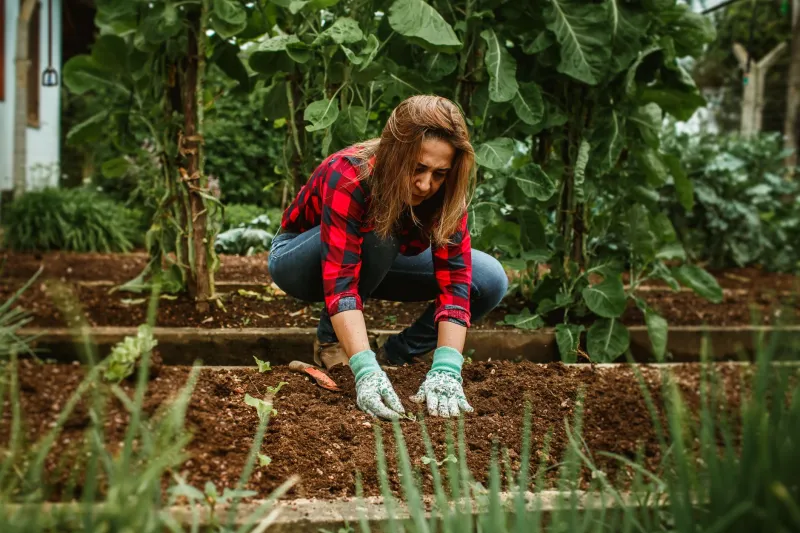
Somewhere between a genuine grassroots farming revolution and a marketing department's fever dream, the word regenerative got complicated.
Five years ago, if you heard a farmer use the term, there was a decent chance they'd spent years rebuilding their soil, rotational grazing their livestock, and obsessing over earthworm counts. Today, you'll find it on bags of potato chips, fast food packaging, and corporate sustainability reports from companies that have changed almost nothing about how they actually source food.
That's a problem. Not just for consumers trying to make honest choices, but for the farmers doing the real work — the ones who've sacrificed yield, taken on financial risk, and genuinely transformed their land — who now find their practices lumped in with whatever a brand's PR team decided to call "regenerative" this quarter.
How a Movement Gets Hollowed Out
Regeneration as a farming philosophy isn't new. Indigenous agricultural communities have practiced land-restorative techniques for centuries. Modern regenerative agriculture — which typically emphasizes no-till or minimal-till practices, cover cropping, composting, biodiversity, and integrated livestock management — gained serious traction in the US over the last two decades, largely through organizations like the Rodale Institute and a wave of passionate small-scale farmers who were watching industrial agriculture degrade the very soil they depended on.
The idea was simple and urgent: instead of just doing less damage, what if farming could actively heal the land?
That message resonated. With consumers, with researchers, and eventually — inevitably — with corporations.
"Once something starts getting consumer traction, the marketing machine finds it," says one Midwest grain farmer who asked not to be named, citing fear of blowback from buyers. "Regenerative went from being a philosophy to being a font choice on a package."
The trouble is, unlike "organic," regenerative agriculture has no federally regulated definition in the United States. There's no USDA standard, no mandatory certification, no legal threshold a farm has to cross before it can call itself regenerative. That vacuum has been filled by a patchwork of third-party certifiers — some rigorous, some not — and a whole lot of brands writing their own rules.
What Fake Regenerative Actually Looks Like
Greenwashing in this space doesn't always look like outright lying. More often, it looks like cherry-picking.
A large commodity operation might adopt cover cropping on a portion of its acreage, then market its entire product line as regeneratively grown. A food brand might partner with a single showcase farm — one that genuinely practices soil-restorative agriculture — while the other 95% of its supply chain remains unchanged. A company might tout its "regenerative commitments" in a glossy annual report while continuing to use synthetic fertilizers, herbicides, and monoculture practices across its core operations.
Dr. Amara Osei, a soil ecologist who consults with farms across the mid-Atlantic and Southeast, has seen this pattern play out repeatedly. "The science of soil regeneration is specific and measurable," she explains. "You can test organic matter levels, microbial diversity, water infiltration rates, carbon sequestration. But most brands making regenerative claims aren't publishing that data. They're publishing feelings."
She points to the rise of what she calls "input substitution theater" — farms that swap out one synthetic input for a slightly less harmful one, then brand the whole operation as regenerative. "Replacing one chemical with a 'natural' alternative doesn't rebuild soil biology. It's still a band-aid on a broken system."
The Farmers Who Are Actually Doing It
Spend any time with farmers who've genuinely committed to regenerative practices and you'll notice something: they're almost never the ones shouting about it.
Take Lucia Vásquez, who runs a 200-acre diversified farm in the Texas Hill Country. Over eight years, she's transitioned from conventional row cropping to a system that integrates cattle, heritage grains, and native perennial grasses. Her soil organic matter has climbed from 1.2% to nearly 4%. She doesn't have a certification. She doesn't have a PR budget. What she has is data, and a waitlist of restaurant buyers who've seen her fields.
"I'm not anti-certification," she says, spreading her hands over a table of soil samples in her barn. "I just think the proof is in the ground, not the paperwork. Come walk my fields. Dig a hole. Count what you find."
That sentiment — come see for yourself — is one of the clearest markers that separates authentic regenerative operations from performative ones. Farmers with nothing to hide tend to invite scrutiny. Brands with something to protect tend to offer brochures.
A Practical Framework for Cutting Through the Noise
So how do you, as a consumer, actually tell the difference? Here's what soil scientists, farmers, and food transparency advocates consistently point to:
Ask for the data, not the story. Genuine regenerative farms can point to measurable soil health improvements over time — organic matter percentages, water infiltration rates, biodiversity assessments. If a brand's only evidence is a feel-good video, keep digging.
Look for whole-system thinking. Real regenerative agriculture isn't a single practice — it's an integrated approach. Be skeptical of claims built around one technique (like no-till alone) while ignoring others. Soil health is a system, not a checkbox.
Trace the supply chain. When a food brand says "regeneratively sourced," ask what percentage of their supply that actually represents. One partner farm out of fifty isn't a regenerative supply chain — it's a photo opportunity.
Seek out third-party verification with teeth. Certifications like Regenerative Organic Certified (ROC) and Land to Market have actual standards and auditing processes. They're not perfect, but they're meaningfully different from a brand-invented "regenerative pledge." Cross-reference any certification you encounter.
Talk to the farmer directly. At your farmers market, your local CSA, your food co-op — ask questions. Not "are you regenerative?" but "what are you doing to build your soil?" The answers will tell you everything.
Why This Matters Beyond Your Shopping Cart
This isn't just about making the right consumer choice, though that matters. It's about what happens to the movement itself when the word loses its meaning.
Farmers who've invested years and real money into genuine land restoration are increasingly frustrated by a marketplace that can't distinguish their work from a brand's talking points. When regenerative becomes synonymous with "vaguely eco-friendly," it stops being a useful signal — for buyers, for policy makers, and for the agricultural community trying to scale these practices.
"We need this to mean something," says Marcus Ellery, a regenerative rancher in eastern Oregon who has spent a decade restoring degraded rangeland. "Because the soil crisis is real, and the solution requires real change. Not a rebrand."
The regenerative agriculture movement has genuine, documented potential to sequester carbon, restore watersheds, rebuild rural economies, and produce food in a way that doesn't borrow against the future. That potential is worth protecting — which means being honest about when it's being exploited.
The ground doesn't lie. The marketing copy, unfortunately, often does.
Want to find farms in your area that are doing the real work? Start with your local SARE (Sustainable Agriculture Research & Education) network, your nearest land-grant university extension office, or the Regenerative Organic Alliance's farm directory.