Selling the Sky: How Carbon Credit Farming Became the Food Industry's Most Profitable Fiction
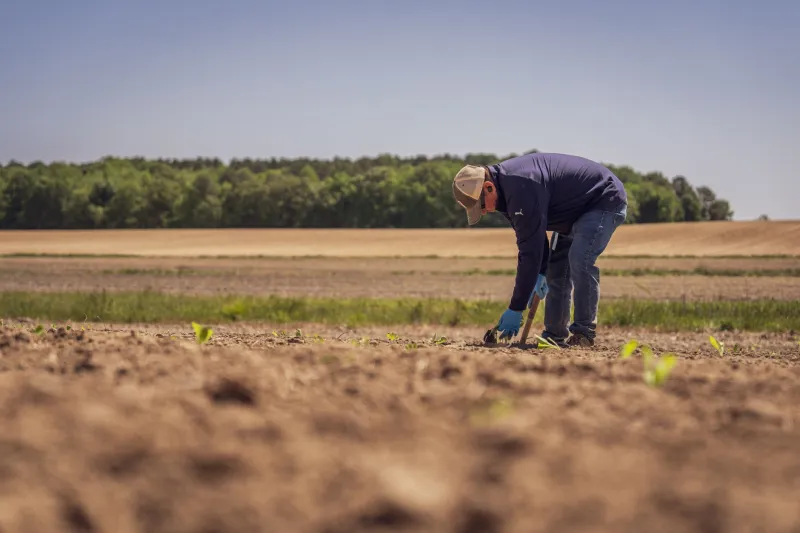
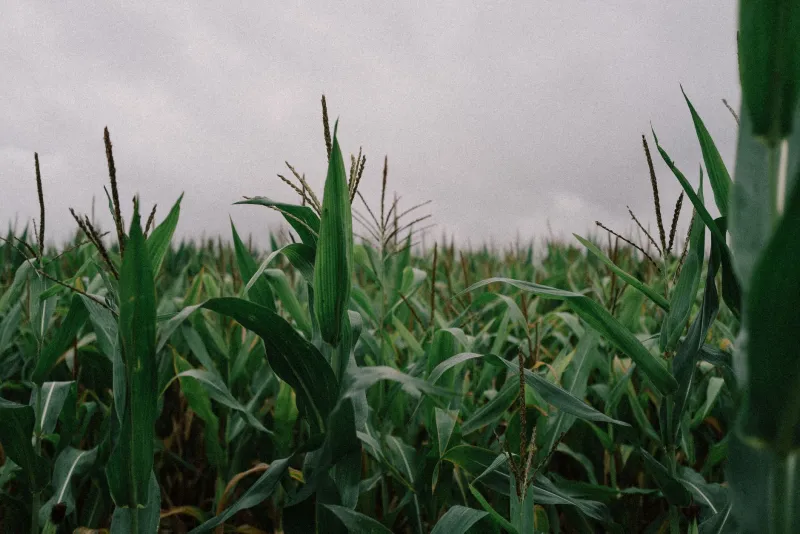
Somewhere in the Midwest, a corn farmer is getting paid. Not for his corn — for his soil. Or more precisely, for the carbon his soil is supposedly pulling out of the atmosphere and locking away underground. He enrolled in a voluntary carbon market program two years ago, makes a modest change to his tillage schedule, and receives a check that supplements his harvest income. His grain now gets marketed downstream as "climate-positive." Consumers pay a little more for it, feeling good about their choice.
It sounds like exactly the kind of win-win the food system desperately needs. And sometimes, it actually is. But increasingly, independent scientists, investigative journalists, and even some farmers themselves are asking an uncomfortable question: are these carbon credits real?
What a Carbon Credit Actually Claims to Be
The basic idea behind soil carbon sequestration is legitimate and well-established. Healthy, biologically active soil can absorb carbon dioxide from the atmosphere and store it in organic matter — a process that simultaneously improves soil fertility and reduces greenhouse gas concentrations. Practices like cover cropping, reduced tillage, and composting genuinely do support this process over time.
Carbon credit programs try to turn that process into a financial instrument. A farm adopts certain practices, a third-party verifier measures the resulting carbon storage (or estimates it through modeling), and the farm earns credits it can sell to corporations looking to offset their own emissions. On paper, it's elegant. In practice, it's riddled with holes.
The core problem is measurement. Unlike a solar panel whose output you can meter precisely, soil carbon is notoriously difficult to quantify. It varies dramatically across a single field, shifts with rainfall and temperature, and can be released back into the atmosphere if management practices change. Most programs don't actually measure soil carbon directly — they use computer models based on reported farming practices. And models, as any scientist will tell you, are only as good as the assumptions baked into them.
The 'We Were Already Doing This' Problem
One of the most well-documented issues in voluntary carbon markets is what researchers call "additionality" — the principle that credits should only be issued for carbon reductions that wouldn't have happened anyway. In theory, you shouldn't get paid for something you were already doing. In practice, that line gets blurry fast.
A 2023 investigation by the nonprofit CarbonPlan analyzed thousands of soil carbon contracts and found that a significant share of enrolled farms had already adopted the credited practices before they ever signed up. Cover cropping that started five years ago, reduced-till fields that predate the program's existence — these farms collected credits for a climate benefit that was already baked in. The carbon was already being stored. The program just found a way to monetize it retroactively.
For consumers, this matters enormously. When a food brand slaps a "carbon neutral" or "climate-smart" claim on its packaging, there's a real chance that claim is backed by credits that represent no new environmental benefit whatsoever. You're paying for a story, not a solution.
The Permanence Problem Nobody Talks About
Even when carbon is genuinely sequestered, there's no guarantee it stays that way. Soil carbon is not a vault — it's a living, dynamic system. A drought, a change in ownership, a single bad season that forces a farmer back to conventional tillage, and years of stored carbon can be released back into the atmosphere in months.
Most carbon credit programs require some form of "buffer pool" — essentially a reserve of credits set aside to cover reversals. But critics argue these buffers are routinely undersized relative to actual risk, particularly as climate volatility increases. A program that issued 10-year contracts in the early 2020s is already watching some of those sequestration claims evaporate as extreme weather reshapes farming realities across the Great Plains and Southeast.
When carbon escapes, the offset that a corporation bought — and that a food brand used to justify its climate-friendly marketing — becomes retroactively fraudulent. But by then, the product has been sold, the premium has been collected, and nobody's issuing refunds.
Not All Programs Are Created Equal
This isn't a story about universal fraud. Some soil carbon programs are doing genuinely rigorous work, and it's worth knowing the difference.
Programs that require direct soil sampling rather than relying solely on modeling are a meaningful step up in credibility. Look for verification processes that include third-party field measurement, not just self-reported practice changes. Organizations like the Soil Carbon Initiative and certain USDA-backed programs under the Inflation Reduction Act's climate-smart commodities funding have begun pushing for more standardized, science-based measurement protocols — though implementation is still inconsistent.
Some of the most credible carbon work happening right now is on farms that aren't selling credits at all. They're building soil health because it makes their land more productive, more drought-resilient, and less dependent on purchased inputs. The climate benefit is real — it's just not being packaged into a financial instrument and sold to a corporation trying to hit a net-zero target by 2030.
What to Actually Look For as a Consumer
So how do you evaluate a climate claim on a food label without a soil science degree? A few practical starting points:
Ask who verified it. A brand claiming carbon neutrality should be able to point you to a specific third-party verifier and a methodology. Vague language like "we work with farmers committed to sustainability" is not verification.
Look for practice-based claims over credit-based claims. A farm that tells you exactly what they're doing — cover cropping, composting, rotational grazing, no-till — is giving you something you can evaluate. A farm that says it's "carbon positive" without explaining how is asking you to trust a number generated by a model you'll never see.
Find out if the farm was already doing it. This one takes a little digging, but farmers who talk openly about their practices and their history are usually the ones who have something real to show. The farms we feature here at Blue Farm Table tend to be the ones who were building healthy soil long before anyone was writing checks for it.
Be skeptical of corporate-scale offset programs. The larger and more industrial the operation, the more likely it enrolled in a carbon program primarily as a marketing and revenue strategy. Small and mid-size farms participating in carbon programs are not automatically more credible, but they're often easier to scrutinize — and more willing to have the conversation.
The Soil Is Still Worth Talking About
None of this means soil health isn't a legitimate climate strategy. It absolutely is. Regenerative practices that rebuild organic matter, reduce erosion, and support microbial life are among the most promising tools we have for both feeding people and stabilizing the climate over the long term.
The problem isn't the soil. The problem is what happens when a genuine ecological process gets turned into a financial product before the science is ready to support it — and when food brands use that product to sell consumers a feeling of impact that may not reflect any measurable change in the atmosphere.
The ground beneath a good farm holds real promise. It just can't hold all the promises being made in its name.