The Clock Is Ticking on Your Favorite Sustainable Farm. Here's How to Help Stop It.
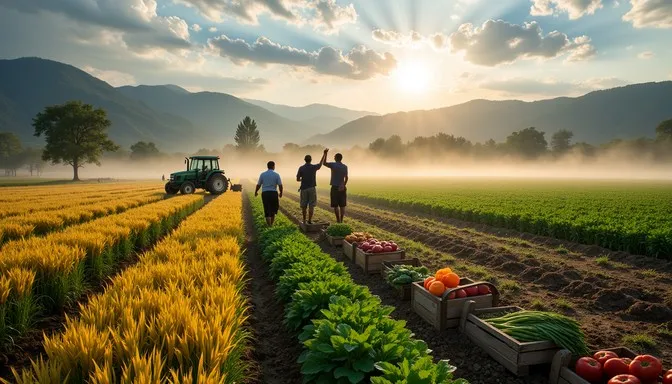
Photo: small sustainable family farm with farmer standing in vegetable field at golden hour, via images.stockcake.com
Picture the farm you love most. Maybe it's the one at your Saturday farmers market — the family operation with the hand-lettered signs and the heirloom tomatoes that actually taste like something. Maybe it's the CSA box that shows up on your porch every Tuesday, packed with vegetables you've started building your meals around. Maybe it's a farm you visited once on a fall weekend, where the kids fed goats and you came home with a trunk full of winter squash.
Now consider this: there's a reasonable chance that farm is one bad season away from a decision that changes everything.
This isn't alarmism. It's arithmetic. And the numbers facing sustainable mid-scale farms in America right now are genuinely brutal.
The Squeeze Nobody's Talking About at the Farmers Market
Farming has never been an easy business. But the specific pressures bearing down on small-to-mid-scale sustainable operations in the 2020s have created a crisis that doesn't get nearly enough attention outside of agricultural policy circles.
Start with land. In most regions of the United States, farmland prices have surged dramatically over the past decade, driven by a combination of investment speculation, development pressure, and the consolidation of industrial agriculture. In Iowa, average cropland values hit record highs in 2023. In California, Oregon, and the Northeast — regions dense with the kind of diversified sustainable farms that supply farmers markets and CSAs — land costs are simply out of reach for most beginning farmers and increasingly difficult for established operations to expand or even maintain when leases come up for renewal.
"I've had three neighbors sell their land to developers in the past four years," says Rosa Thibodeau, who runs a 120-acre diversified vegetable and pasture operation in Vermont. "Every time that happens, I lose a little bit of the agricultural context that makes what I do viable. And every time a lease comes up around here, I'm competing against buyers who aren't farming the land at all."
Then there's labor. Sustainable farming is, by nature, more labor-intensive than industrial commodity production. It doesn't scale the same way, can't be automated as easily, and demands skilled workers who understand the rhythms of a diverse operation. The farm labor market in the US is under enormous strain, and the workers who do show up are increasingly expensive to hire and house — costs that don't scale neatly with farm revenue.
And then there's the wholesale trap. Many mid-scale sustainable farms supplement their direct sales by supplying restaurants, food co-ops, and regional grocery chains. That wholesale channel sounds like a growth opportunity. In practice, it often means accepting prices that barely cover production costs, because buyers — even well-meaning ones — are trained to negotiate down.
The Models That Are Actually Working
Here's where the story gets more interesting, because some farms are figuring it out — and the strategies they're using are worth understanding.
The CSA reinvention. Community Supported Agriculture has been around since the 1980s, but a new generation of farmers is redesigning it for the way people actually shop now. Flexible share sizes, add-on options, online management platforms, and hybrid models that combine weekly boxes with farm-store pickup have dramatically improved CSA retention rates. Farms like Broadfork Farm in North Carolina and Roxbury Farm in New York have built waiting lists by treating their CSA members less like subscribers and more like genuine partners in the operation.
Direct-to-consumer digital infrastructure. Platforms like Barn2Door, Local Line, and Farmigo have made it dramatically easier for small farms to run their own online stores, manage wholesale accounts, and build the kind of recurring customer relationships that smooth out the income volatility that kills farm businesses. The farms that have invested in their own digital presence — email lists, online ordering, social media that actually shows what's happening in the fields — are less dependent on the farmers market booth as their sole direct-sales channel.
Agritourism as a revenue bridge. Farm stays, U-pick operations, farm dinners, educational workshops, and seasonal events have become meaningful revenue streams for operations that might otherwise struggle to stay afloat on food sales alone. A well-run farm dinner can gross more in a single evening than a week at the farmers market. A U-pick berry operation converts customers into an unpaid harvest workforce while charging them for the privilege. It sounds almost too clever, but it works — and it builds the kind of deep community connection that turns customers into advocates.
Multi-farm cooperatives. Some of the most resilient sustainable farm operations in the country aren't single farms at all — they're informal or formal cooperatives where neighboring farms share equipment, split wholesale accounts, coordinate delivery logistics, and collectively market themselves to institutions like schools, hospitals, and corporate cafeterias. The economics of scale that small farms can't achieve alone become possible when three or four operations work together.
What You Can Actually Do
Consumer choices aren't a substitute for policy change — we need better farmland access programs, stronger anti-speculation measures, and agricultural lending that actually works for small diversified operations. But don't underestimate the direct impact of how you spend your food dollars.
Buy a CSA share and stick with it. The predictable, upfront cash flow from CSA memberships is genuinely stabilizing for farm businesses. Paying in full at the start of the season gives farmers capital when they need it most — before harvest, when expenses are highest.
Show up for farm events. When your local farm hosts a dinner, a workshop, or a U-pick day, go. Bring friends. That revenue is often what keeps the lights on during a tough season.
Buy direct whenever you can. Every dollar that goes directly from you to a farmer — at the farmers market, through a farm's online store, at a farm stand — is a dollar that doesn't get shaved by a distributor, a retailer, or a wholesale buyer's margin.
Tell people about the farms you love. Word of mouth is still the most powerful marketing tool a small farm has. If you love what someone is growing, say so — loudly, to your friends, your neighbors, and on whatever social platforms you use.
Ask your farmers what they actually need. Sometimes it's customers. Sometimes it's volunteers for a harvest day. Sometimes it's just someone willing to share their newsletter. You won't know unless you ask.
The Land Is Only as Permanent as the People on It
Sustainable farming doesn't happen in a vacuum. It happens because specific people made a decision to steward specific pieces of land in a specific way — and because enough of their community decided that work was worth supporting.
When those farms disappear, they don't get replaced by other sustainable farms. They get replaced by development, by industrial commodity operations, or by land that simply sits idle while an investment firm waits for values to climb.
The farmers at your market, in your CSA, and down the road from your favorite fall orchard are not inevitable. They are choices — theirs to keep farming, and yours to keep them viable.
At Blue Farm Table, we believe the relationship between eaters and growers is one of the most important ones we can tend. These farms are worth fighting for. Let's act like it.