That Charming Red Barn on the Label Is Owned by a Private Equity Firm
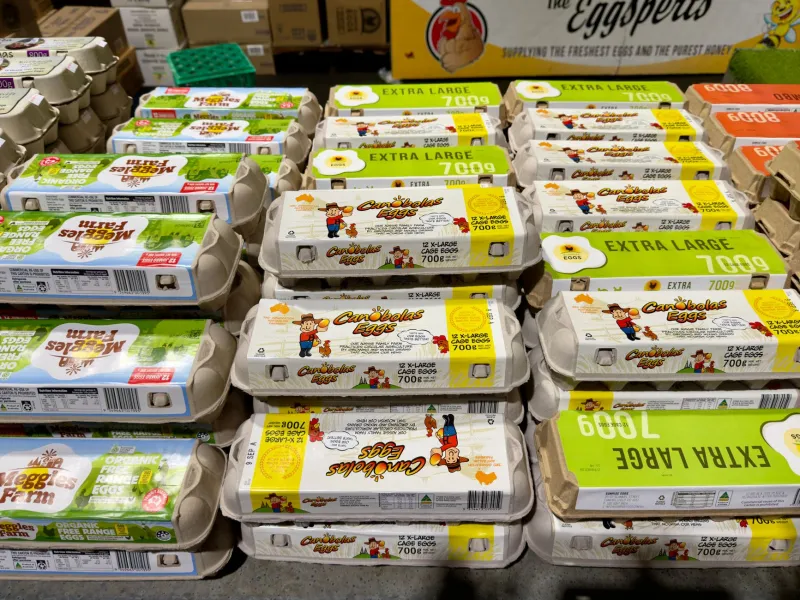
Let's talk about the barn. You know the one — weathered red, hand-drawn, sitting on the label of a bag of chips or a carton of 'farmhouse' eggs, radiating nostalgia and implied virtue. Here's the thing about that barn: there's a decent chance it doesn't exist. And even if it does, there's a better chance the company that put it on the package has never set foot on the property.
Food packaging has undergone a quiet rebrand. As shoppers got savvier about industrial food, the industrial food companies didn't change how they operate — they changed how they look. Welcome to the era of the fake farm.
The Gentrification of the Grocery Aisle
Call it pastoral branding, call it farm-washing, call it what it is: a costume. The playbook is consistent. Take a product made at industrial scale — eggs from millions of hens, milk pooled from hundreds of dairies, produce from contract growers across three states — and wrap it in the visual language of the small family farm. Serif fonts. Muted earth tones. A fictional founder with a trustworthy first name. Maybe a handwritten 'est. 1947' that refers to a holding company's paperwork, not a harvest.
This isn't a fringe practice. Some of the most aggressively 'farmhouse'-branded products on American shelves belong to conglomerates with revenue larger than the GDP of the states where their 'farms' supposedly sit. One famous example: a dairy brand whose wholesome imagery and founding-family story masked ownership by one of the largest packaged-food corporations on earth. The barn is real. The story is not.
Why This Matters More Than a White Lie
You might shrug — all marketing is fantasy, right? Wrong, for two reasons.
First, the packaging gap is widening precisely because values-based shopping is growing. Consumers will pay premiums for 'farm-fresh,' 'family-owned,' and 'honestly raised.' Every dollar that flows to a fake farm is a dollar that didn't flow to an actual one. This isn't victimless deception; it's market distortion that punishes the real small farms the imagery is imitating.
Second, it corrodes trust in the labels that do mean something. When 'farmhouse' is legally meaningless, shoppers stop believing anyone — including the certified-organic, worker-friendly, genuinely regional producers trying to signal honestly.
The Five-Point Fake Farm Decoder
Keep this on your phone. It takes thirty seconds in the aisle.
1. Find the parent company. Flip the package over or search '[brand] parent company.' If a conglomerate you've never heard of owns it, the family-farm framing just got a giant asterisk. A surprising number of boutique-looking brands are portfolio products of multinationals.
2. Hunt for a location. Real farms put a place on the package — a town, a county, a road. Vague geography ('the heartland,' 'the rolling hills of America') is a tell. If you can't figure out what state the food comes from, that's not an accident.
3. Read the fine print on the front. 'Farmhouse style' means nothing — it's a flavor descriptor. 'Farm fresh' has no legal definition. 'Family farmed' might describe one family among thousands of contract growers. Words like 'estate,' 'harvest,' and 'artisan' are decoration unless they're backed by a certification.
4. Check for actual certifications. USDA Organic, Animal Welfare Approved, Certified Humane, Fair Trade — these involve third-party verification. They're not perfect, but they're evidence. A red barn plus zero certifications is a mood, not a supply chain.
5. Search the brand's transparency page. Genuinely transparent producers name their farms, post photos of real facilities, and answer questions about sourcing. If the website's 'Our Story' page features a sepia-toned grandfather and zero information about where the product is actually made, you've been handed a screenplay instead of a supply chain.
The Real Farms Are Easier to Find Than You Think
Here's the good news: authentic producers are usually dying to be found. They list their address. They name their growers. They invite you to visit — actually visit, not a 'virtual tour' of a stock-photo barn. The farmers market test applies to packaging too: real farms sound specific ('our orchard in Yakima'), while fake farms sound generic ('quality grown with care').
And when you do find a real one, your dollars do double duty. You're getting better food and you're starving the imposters of the one thing they're farming: your goodwill.
The soil can't lie. The label can. Shop accordingly.